

Introduction:
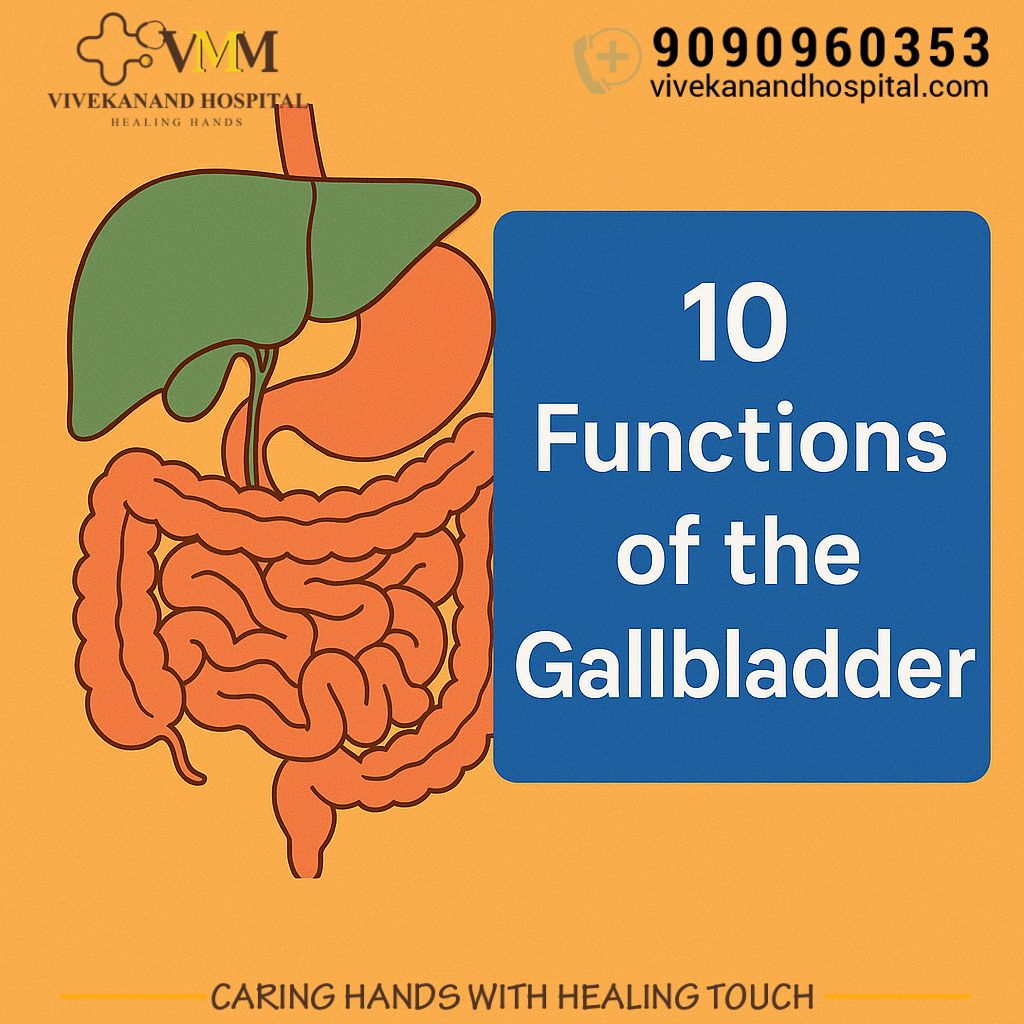
The gallbladder may be small, but it plays a crucial role in your digestive system. Located beneath the liver, this pear-shaped organ stores and regulates bile—a digestive fluid essential for breaking down fats. At Vivekanand Hospital Bhubaneswar, we emphasize preventive healthcare and organ function awareness. Understanding the gallbladder’s role helps patients make informed decisions about digestive health.
Top 10 Vital Functions of the Gallbladder:
Storage of Bile:
The gallbladder’s primary function is to store bile produced by the liver until it is needed for digestion. Bile contains bile salts, cholesterol, and waste products like bilirubin.
Concentration of Bile:
While in the gallbladder, bile becomes concentrated—up to tenfold—making it more effective at digesting fats when released into the small intestine.
Controlled Release of Bile:
The gallbladder contracts after a meal, particularly when fats are consumed, releasing bile into the duodenum via the bile ducts.
Emulsification of Fats:
Bile helps emulsify fats, breaking them into smaller droplets so enzymes like lipase can further digest them efficiently.
Aids in Absorption of Fat-Soluble Vitamins:
The emulsification process also enables better absorption of vitamins A, D, E, and K—essential for immunity, bone health, and blood clotting.
Regulates Bile Flow:
The gallbladder helps regulate when and how much bile is delivered to the intestine, preventing overload or deficiency.
Supports Digestive Timing:
Its release mechanism is synchronized with the body’s digestion cycle, ensuring optimal nutrient breakdown.
Prevention of Intestinal Infections:
Bile has mild antimicrobial properties that help suppress harmful gut bacteria, promoting intestinal health.
Maintains Cholesterol Balance:
By storing bile, which contains cholesterol, the gallbladder helps regulate cholesterol levels in the body.
Read Also:Understanding Guillain-Barré Syndrome-Vivekanand Hospital Bhubaneswar
Acts as a Reservoir During Fasting:
During periods without food intake, the gallbladder retains bile, ensuring its availability as soon as digestion resumes.
Why Is Gallbladder Health Important?
Gallbladder dysfunction can lead to gallstones, bile duct obstruction, or even infection. Early symptoms often go unnoticed but can escalate quickly. At Vivekanand Hospital Bhubaneswar, we offer advanced diagnostics and surgical interventions, including laparoscopic cholecystectomy.
When Should You See a Doctor?
If you experience any of the following, consult a specialist immediately:
– Sharp abdominal pain after eating
– Nausea or vomiting
– Yellowing of the skin (jaundice)
– Fever with chills
Gallbladder Services at Vivekanand Hospital Bhubaneswar:
– Ultrasound Imaging
– Liver Function Tests
– Laparoscopic Gallbladder Surgery
– Post-operative Care & Recovery
– Gastroenterology Consultations
Preventive Tips for a Healthy Gallbladder:
– Eat a fiber-rich, low-fat diet
– Maintain a healthy weight
– Stay hydrated
– Avoid rapid weight loss
– Get regular health checkups
Conclusion:
The gallbladder is a small but significant organ that contributes immensely to our digestive health. From storing and concentrating bile to aiding in fat digestion, its functions are vital to maintaining a balanced system. If you’re experiencing symptoms or want a gallbladder health check, Vivekanand Hospital Bhubaneswar is equipped with expert gastroenterologists and modern diagnostic tools to guide you toward better health.
